Drupal Security Update: Installer Flaw Under Attack, What to Do Now
Two Drupal core fixes in a week, and attackers are already using the installer to take over websites. Here's who is at risk and the checks every Drupal site owner should make this week.
If your business website runs on Drupal, this is one to deal with before the week is out. On 25 November 2026 Drupal released an urgent Drupal security update for a flaw in its installer that lets an anonymous visitor take control of a website. It follows a separate installer fix only a week earlier, and attackers have been quick to pounce on both.
You don't need to be a developer to understand the risk. Think of the installer as the setup wizard used when a website is first built. On a finished site it should be locked away for good. On some sites, it isn't.
What does the Drupal security update fix?
Drupal's security team has published two core advisories in quick succession:
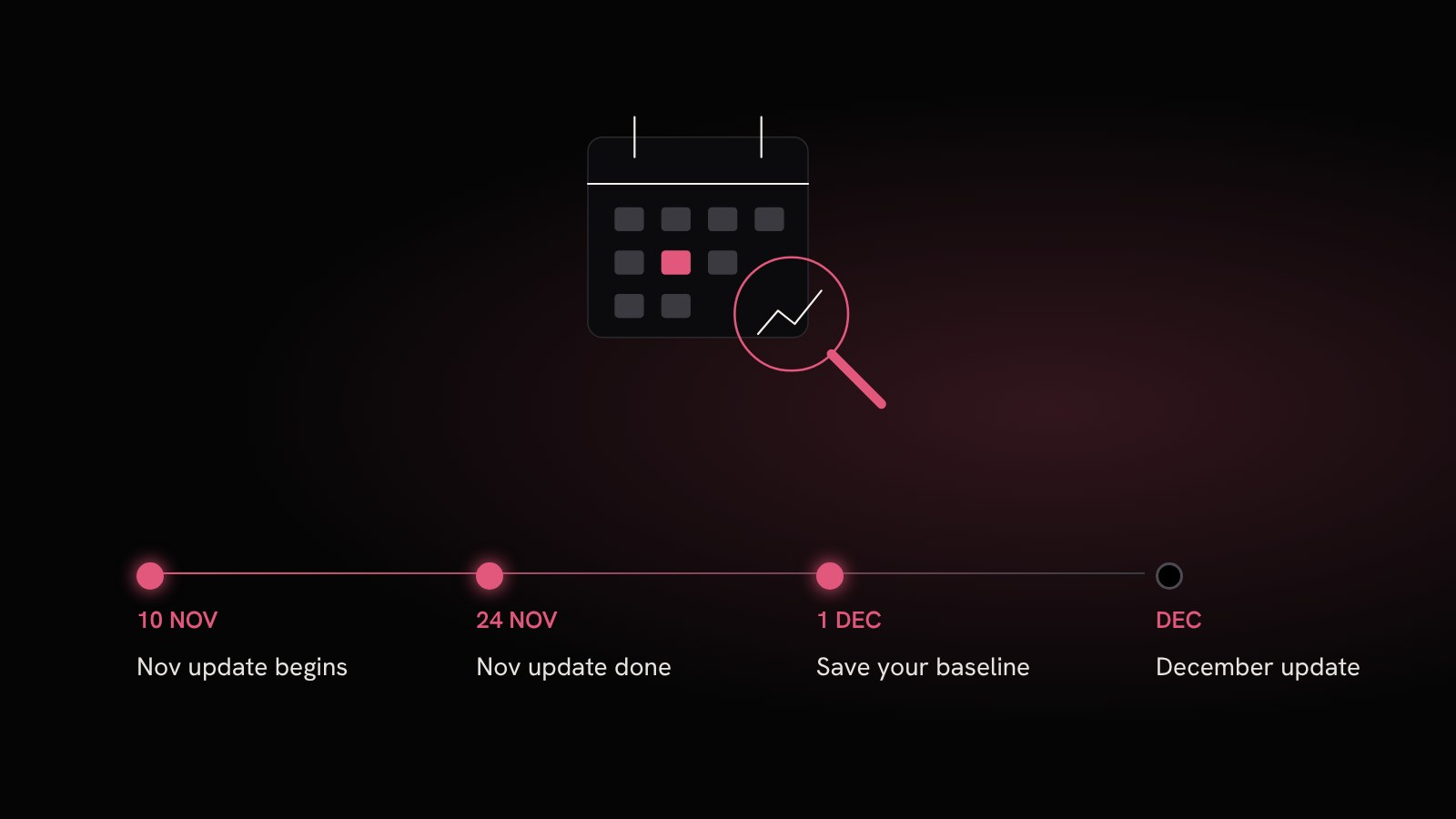
- 18 November 2026, SA-CORE-2026-017 (CVE-2026-132165): fixed several ways the installer could be abused on live websites. Drupal later said this was exploited on live sites from the evening of 19 November, and the US Cybersecurity and Infrastructure Security Agency added it to its list of known exploited vulnerabilities on 24 November, according to BleepingComputer.
- 25 November 2026, SA-CORE-2026-019 (CVE-2026-136716): closed a gap the first fix left open, affecting sites in an "unusual or incomplete" install state where the installer can still be reached from the internet. Drupal rates it highly critical, 21 out of 25 on its own scale, and its advisory states: "This is being exploited in the wild."
The worrying part, as Security Affairs reports, is that the vulnerable state can't be seen from the Drupal admin screens, and a website that has already been taken over may no longer look vulnerable at all.
Is your Drupal website affected?
Your site is at risk if it runs Drupal core and the installer page (install.php) can still be reached from the web. The fixed versions are:
| If you're on | Update to |
|---|---|
| Drupal 11.4.x | 11.4.14 |
| Drupal 11.0 to 11.3.x | 11.3.23 |
| Drupal 10.6.x | 10.6.23 |
Drupal 11.2 and earlier, Drupal 10.5 and earlier, and Drupal 8 and 9 are out of support and won't get a fix. Sources disagree on Drupal 7: hosting provider Pantheon says it isn't affected by this advisory, while one Drupal 7 support company says it was able to reproduce the problem. As Drupal 7 has also reached end of life, we'd treat any Drupal 7 site as at risk and lock the installer down anyway.
Not sure which system your website uses? Our free website security check is a good place to start, or simply ask your web developer.
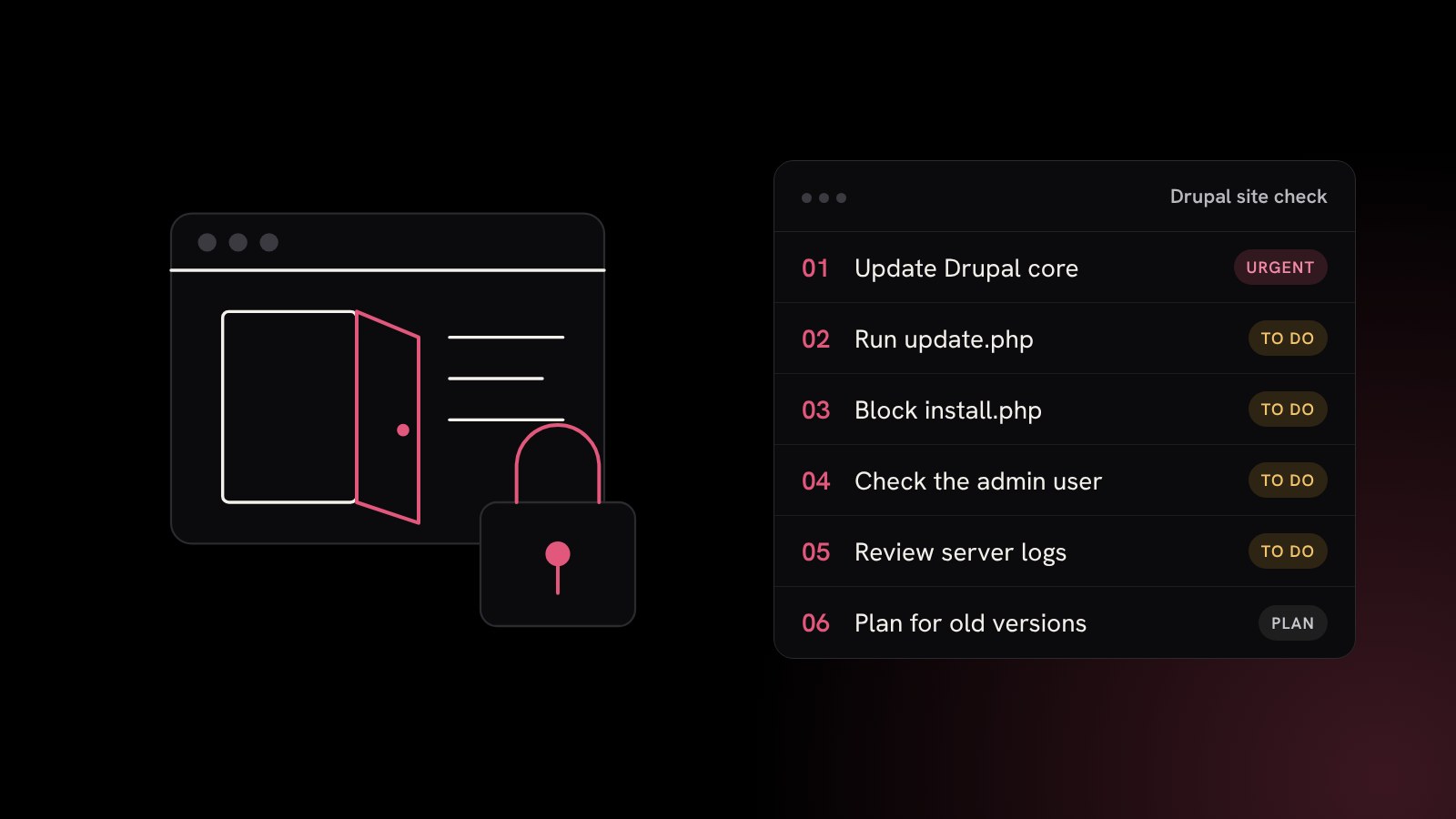
Six checks to make on every Drupal site
1. Install the Drupal security update
Move to 11.4.14, 11.3.23 or 10.6.23 as appropriate. If your site is with a managed host or agency, ask them to confirm the exact version it now runs, in writing.
2. Run the database update
The new releases include a required database update. After upgrading, run update.php or the command drush updb. Skipping this step leaves the job half done.
3. Block the installer at the server
Don't rely on the patch alone. Block public access to /core/install.php in your web server or firewall settings on every Drupal site, including ones you think are already patched. Take care not to block update.php, which you still need. Re-check after every deployment, because reinstalling site files with Composer can put the installer back.
4. Check the main admin account
Drupal's first account (user 1) has full control of the site. Make sure its email address is one you own, look for changes you didn't make and consider resetting its password.
5. Look through your server logs
Ask whoever looks after your hosting to search the access logs for requests to install.php since 18 November, and for any unexpected changes to user accounts. Any site that left its installer reachable after the first fix should be treated as possibly compromised until checked.
6. Plan for unsupported versions
If your site is on a version that won't be patched, blocking the installer buys time, but it isn't a long-term answer. Budget now for an upgrade or a rebuild.
Not on Drupal? The lesson still applies
Most of our customers use WordPress, and this flaw doesn't affect them. The wider lesson does, though: leftover setup files, forgotten staging copies and old test sites are easy openings for attackers. We saw the same pattern with the recent WordPress updater vulnerability and the critical PHP security release in October. Keeping software current and removing what you don't use goes a long way.
How Blink Web can help
With 30+ years of combined experience looking after websites and servers for UK businesses, from sole traders to larger teams, we can take this off your plate:
- Managed VPS hosting: we patch, monitor and harden your server for you.
- Penetration testing: find exposed pages and weak spots before attackers do.
- Incident response: fast help if you think your website has already been taken over.
- Website design: if your Drupal site is out of support, we can rebuild it on a secure, easy-to-manage platform.
Worried about your Drupal website? Contact us today and we'll check it with you.
Sources: Security Affairs: Drupal warns of new critical flaw exploited in the wild, BleepingComputer: Hackers now exploit critical Drupal RCE flaw to hijack sites, Kudelski Security: Drupal core access bypass allows site takeover via the installer, Pantheon: Drupal core security release SA-CORE-2026-019, Drupal.org: SA-CORE-2026-019.