Google AI Mode Ads Are Coming to the UK: What Advertisers Should Do
Google plans to start showing ads inside AI Mode in the UK before the end of the year. If you run Google Ads, your campaigns could appear there automatically. Here's what to check first.
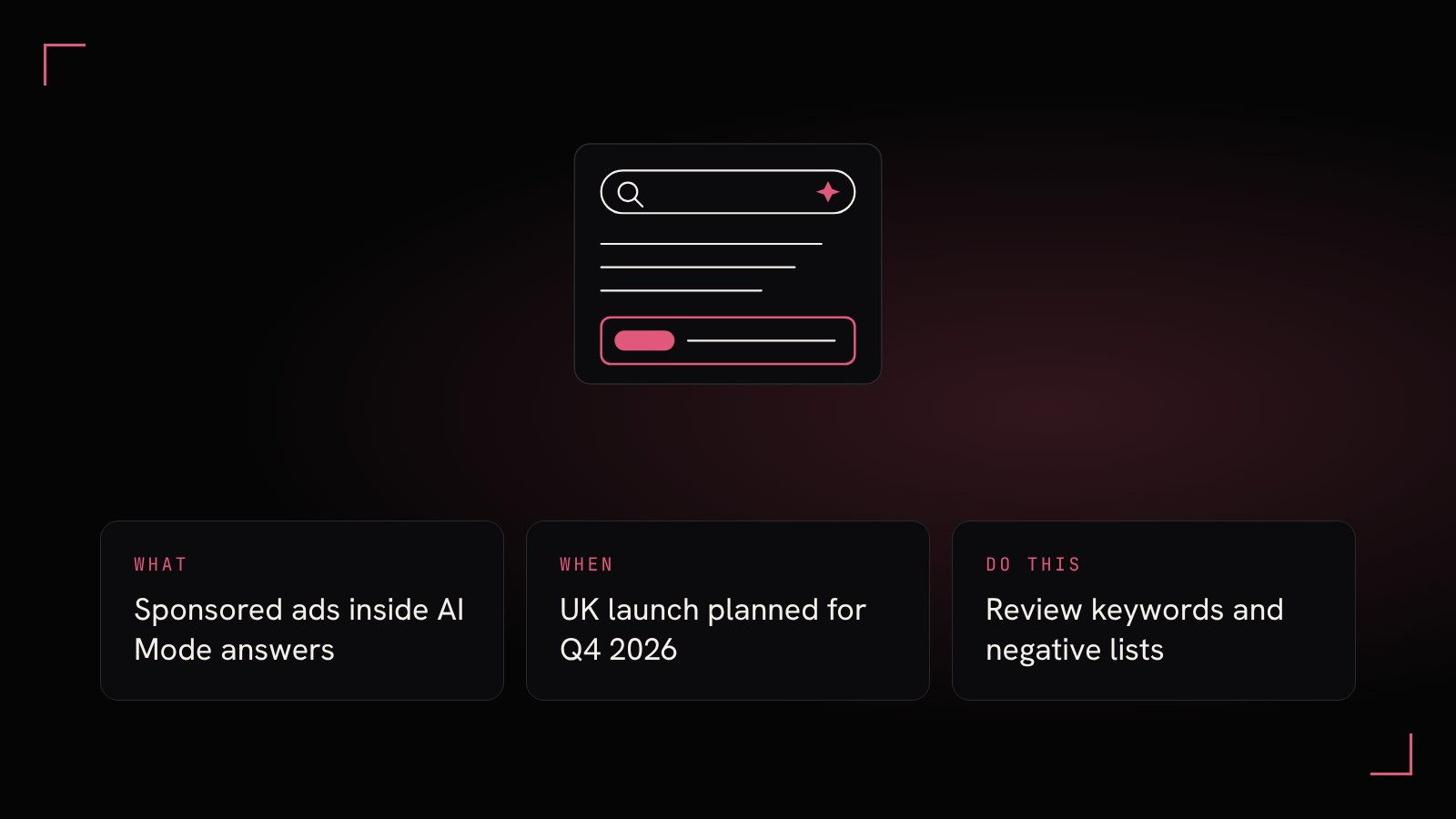
If you pay for Google Ads, your adverts may soon be appearing somewhere new without you lifting a finger. On 28 October, Google said it plans to bring Google AI Mode ads to the UK during the last quarter of 2026, which means some time before the end of December. For UK businesses, whether you spend a few pounds a day or run a full marketing team, it's worth understanding what's changing before it lands.
AI Mode is the chat-style version of Google Search, where people ask longer questions and get a written answer with links, then keep asking follow-up questions. Ads have run there in the US since May 2025. Now they're going international.
What did Google announce?
In its post announcing ads in AI Mode for new markets, Google confirmed:
- Ten countries now: Australia, Canada, India, Kenya, Malaysia, New Zealand, Nigeria, Pakistan, the Philippines and Singapore.
- The UK next: along with Brazil and Mexico, the UK is listed for Q4 2026. No exact date has been given.
- Multiturn ads in the US: ads that can appear in the answers to follow-up questions, not just the first one. These are US only for now.
- Clear labelling: ads will be marked "Sponsored".
Google also said that questions asked in AI Mode are on average three times longer than traditional searches, based on its own US data.
How will AI Mode ads work for UK advertisers?
This is the part that matters most if you already advertise. According to coverage of Google's guidance by ContentGrip and Search Engine Roundtable:
You don't need a new campaign
Existing Search, Shopping and Performance Max campaigns become eligible automatically, using the budgets you already have. There's no separate AI Mode campaign type and no extra fee.
You can't switch it off on its own
You can't buy AI Mode placements by themselves, and you can't exclude them while keeping your normal search ads. The tools you do have are the familiar ones: negative keywords and brand exclusions.
Your keyword match types matter more
Exact and phrase match keywords are used when someone's question shows a clear intent to buy. Broad match, AI Max, Shopping and Performance Max can match your ads to questions in a looser, more contextual way. That can bring in new customers, or spend money on questions that were never going to turn into sales.
Reporting is blended in
Results from AI Mode are included in your normal Google Ads reports rather than shown as a separate line, so it may be hard to tell exactly how ads there are performing.
What should you do before launch?
A few hours spent now could save wasted spend later. Here's our checklist:
- Review your search terms report. Look at what people actually typed before clicking your ads over the last 90 days. If broad match is already pulling in odd searches, longer AI Mode questions will only widen the net.
- Build out your negative keyword list. Add terms for jobs you don't do, places you don't cover and the "free" or "DIY" searches that rarely convert.
- Check your landing pages. Someone arriving from a detailed AI answer expects a page that matches their question. Clear service pages, prices where you can show them and an easy way to get in touch all help.
- Set a baseline. Note your current cost per enquiry and conversion rate now, so you can spot any change once AI Mode ads go live in the UK.
- Keep your organic presence strong. Google's help pages say ads don't change the answer itself: "Paid advertising does not influence the organic responses generated by Google AI." Being mentioned in the answer still depends on your website, which is why it's worth reading our guide to getting your website picked as a link in AI Overviews.
Should UK businesses be worried?
Not worried, but alert. Ads in AI Mode are another place your business can be seen, at a moment when someone is actively researching. Google's own US data suggests people click sponsored and unpaid product listings in AI Mode at similar rates, although that figure hasn't been independently checked.
The risk is the lack of control. With no way to opt out of AI Mode alone and blended reporting, a poorly set up account could quietly spend more on questions that don't lead to work. The businesses that do best will be the ones with tidy campaigns, sensible negative keywords and websites that answer real customer questions well.
It also strengthens the case for not relying on paid ads alone. Our guide on how to optimise your website for AI search covers the unpaid side, and a quick free SEO health check will flag any technical issues holding your site back.
How Blink Web can help
With 30+ years of combined experience, we help UK businesses of all sizes get found, whether that's paid or organic:
- Social media and marketing: paid search set up and managed properly, including keyword and negative keyword reviews ahead of AI Mode ads.
- SEO: local, technical and AI search optimisation so you're in the answer, not just next to it.
- Website design: landing pages built to turn visitors into enquiries.
Want a second opinion on your Google Ads account before AI Mode ads reach the UK? Get in touch and we'll take a look.
Sources: Google: Ads in AI Mode expand to new markets, Search Engine Roundtable: Google expands ads in AI Mode in more countries and multiturn ads in the US, ContentGrip: Google expands AI Mode ads to 10 markets, Phandroid: Google is rolling out ads in AI Mode to 10 more countries, Discoverable: Google plans to put ads in AI Mode in the UK.